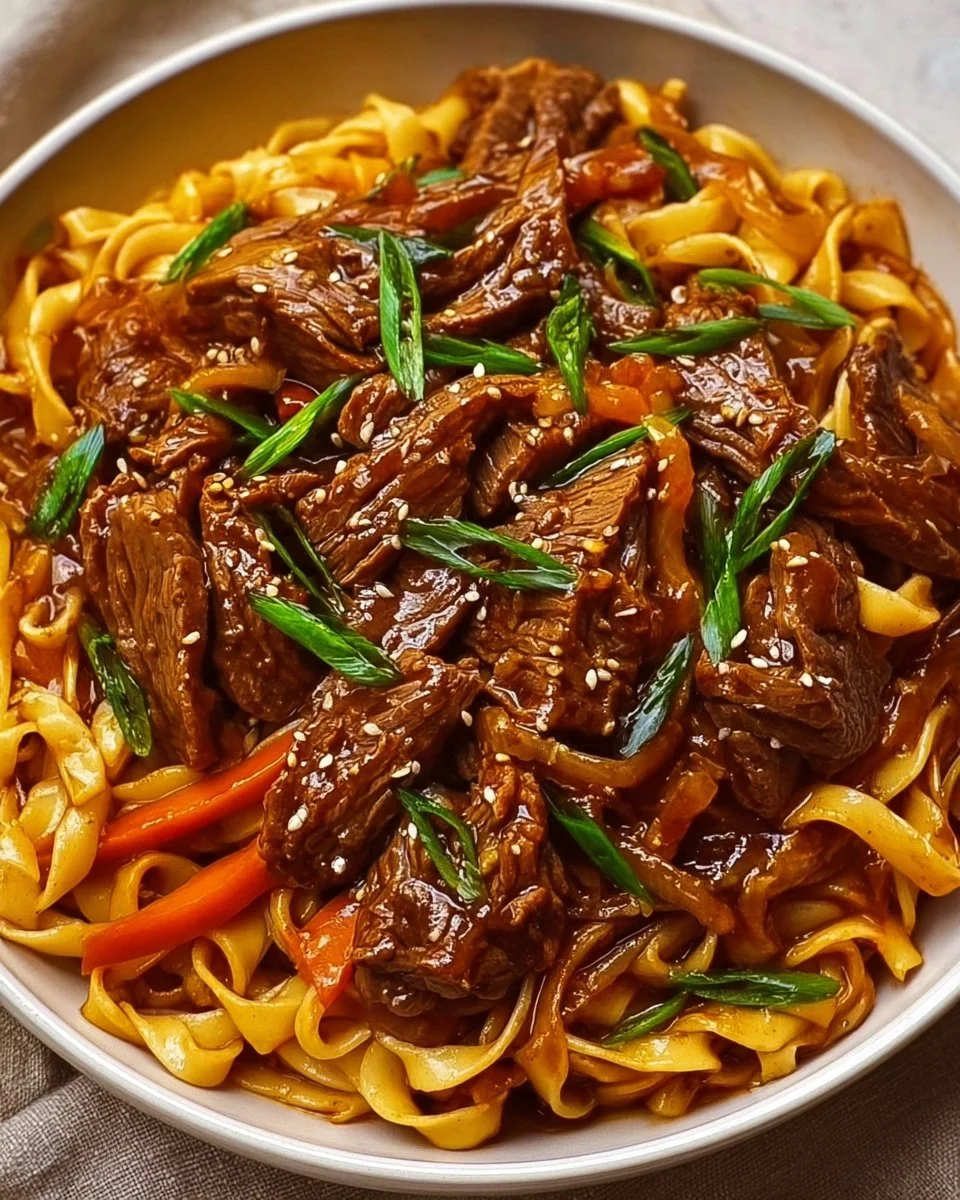
The aroma that wafts through your kitchen while cooking Korean Beef Noodles is simply irresistible, a savory embrace that beckons you closer. Imagine the delectable scent of tender beef simmering in a rich broth, infused with the warmth of garlic and the spicy kick of gochujang—it’s like a hug for your senses. As the beef gently braises, it becomes so tender, it practically falls apart under a hint of pressure, inviting you to add your favorite noodles and vibrant, crunchy vegetables.
Plating this dish feels like a celebration. The noodles lie nestled, absorbing the deep flavors of the broth, while colorful vegetables contrast beautifully, adding visual appeal. Each bite transports you into a whirlwind of textures and flavors: the silkiness of the noodles, the unmistakable umami depth of the beef, and the refreshing crunch of bright bell peppers and carrots. This comforting dish is not just a meal; it’s an experience—one you’ll want to relive over and over.
Why You’ll Love This Korean Beef Noodles
Korean Beef Noodles swiftly earns a cherished spot in your recipe repertoire for several captivating reasons. First, the delightful balance of sweet, spicy, and savory makes each mouthful an extraordinary journey for your taste buds. Gochujang adds a unique Korean flair, while the garlic and sesame oil enrich the flavor profile, transforming humble ingredients into a remarkable feast.
The beauty of this dish lies also in its versatility. Perfect for cozy family dinners, festive gatherings, or even a comforting weeknight meal, you can whip up a hearty pot and let it simmer to perfection in a slow cooker. The best part? You can customize it endlessly. Swap in your preferred veggies or adjust the spice level to suit your palate; this dish adapts to your culinary whims while maintaining a lush, comforting essence. Your friends and family will ask for seconds—and thirds!
Preparation Phase & Tools to Use
Before diving into the culinary adventure of Korean Beef Noodles, gathering the right tools makes all the difference. Let’s look at what you’ll need to create this dish effortlessly.
-
Slow Cooker: This magical appliance allows your beef to stew for hours, resulting in deeply tender meat that’s bursting with flavor. You can set it and forget it, freeing up your time for other tasks or relaxation.
-
Cutting Board and Sharp Knife: Precision helps in slicing your ingredients evenly, ensuring they cook uniformly and the flavors meld beautifully.
-
Large Mixing Bowl: Use this for tossing your beef and vegetables in the delicious marinade before they meet the slow cooker.
-
Colander: Post-cooking, this helps drain the noodles quickly, prepping them for a decadent mix-in with all the flavorful goodness.
Preparation Tip: Take your time when chopping vegetables. Uniform pieces not only enhance presentation but also ensure even cooking.
Ingredients for Korean Beef Noodles
-
1 lb beef (chuck or brisket), cut into pieces: Choose chuck for a more economical and gelatinous cut that becomes buttery soft with slow cooking, or brisket for a slightly richer flavor profile.
-
4 cups beef broth: A good quality broth serves as the foundation for your dish, enhancing the umami flavors of the beef. Low-sodium broth offers more control over seasoning.
-
8 oz noodles (udon or rice noodles): Both varieties lend different textures. Udon brings a chewy experience, while rice noodles are light and delicate.
-
1 cup sliced carrots: Their sweetness provides balance and a lovely crunch.
-
1 cup bell peppers, sliced: Opt for a mix of colors for visual appeal, each adding a subtle flavor twist.
-
1 onion, sliced: This element adds layers of flavor—caramelized to perfection as they cook.
-
3 cloves garlic, minced: The aromatic essence that sends your senses into overdrive.
-
2 tablespoons soy sauce: This deepens the savory notes while balancing the other flavors.
-
1 tablespoon sesame oil: A drizzle of nuttiness that enhances the overall experience.
-
1 tablespoon gochujang (Korean chili paste): This fantastic ingredient introduces warmth and earthiness, elevating your dish to new heights.
-
Salt and pepper to taste: Essential for enhancing flavor depth.
-
Green onions for garnish: A vibrant finishing touch that adds freshness and a mild bite.
Custom Substitutions: Feel free to use chicken for a lighter protein, or go vegetarian with tofu or seitan. Substitute vegetables based on-season availability or personal preference; snow peas, broccoli, or zucchini work beautifully too!
How to Make Korean Beef Noodles
Creating this mouthwatering dish is simple and satisfying with the following steps:
-
Combine Ingredients in Slow Cooker: Begin by placing the beef chunks in your slow cooker. Pour in the beef broth, and add minced garlic, soy sauce, sesame oil, and gochujang. Stir until well mixed, ensuring every piece of beef is coated in the flavorful marinade.
-
Add Vegetables: Toss in your sliced carrots, bell peppers, and onion. Gently stir to incorporate, making sure the veggies mingle with the beef and sauce.
-
Cooking Time: Cover the slow cooker and let it work its magic on low for 6-8 hours. This slow cooking transforms your ingredients into a deliciously tender masterpiece.
-
Prepare the Noodles: About 30 minutes before serving, cook the noodles according to package instructions. Ensure they remain firm to the bite, as they will absorb some broth later.
-
Drain and Serve: Once the noodles have cooked, drain them well. Serve them in bowls, generously topping with the creamy beef and vegetable mixture from the slow cooker.
-
Garnish: For the final flourish, sprinkle sliced green onions over the top. This garnish not only adds a pop of color but brings freshness to every bite.
Chef’s Notes & Helpful Tips
-
Make-Ahead Magic: Prepare the beef mixture the night before and refrigerate it. This lets the flavors deepen, and you can simply plug in the slow cooker when ready to cook.
-
Cooking Alternatives: If you don’t have a slow cooker, you can achieve tender beef on the stovetop by simmering in a heavy pot for about 3-4 hours on low heat. Alternatively, a Dutch oven works beautifully for oven-braising.
-
Customization: Experiment with spices like ginger for extra warmth or throw in mushrooms for added texture. You can also adjust the gochujang based on your spice tolerance.
Common Mistakes to Avoid
Crafting Korean Beef Noodles is simple, but a few pitfalls can affect your final dish:
-
Overcrowding the Slow Cooker: Ensure the beef has enough room to cook evenly. If the pot is too full, it may steam instead of braise, leading to tough meat.
-
Using Lean Cuts: Avoid lean cuts like sirloin; fattier cuts break down beautifully, adding richness to the broth.
-
Skipping the Broth: Without a flavorful broth, your dish may fall flat. Invest in a high-quality beef broth or create your own for an elevated experience.
What to Serve With Korean Beef Noodles
This dish stands out on its own, but adding complementary sides enhances your meal experience. Here are a few suggestions:
-
Kimchi: This fermented side brings a tangy crunch, balancing the richness of the beef noodles.
-
Steamed Bok Choy: This simple side adds a delightful crunch and its mild flavor contrasts beautifully with the dish.
-
Korean Fried Chicken: Indulge in crispy golden chicken tossed in sweet and spicy sauce for an unforgettable feast.
-
Rice Cakes (Tteokbokki): These chewy rice cakes add another delicious texture and are perfect for scooping up extra sauce.
-
Spicy Korean Pickles: Add a zing with pickled radishes or cucumbers to cleanse the palate between bites.
-
Sesame Spinach Salad: A refreshing salad is perfect for balancing the meal’s heartiness with its nutty dressing.
-
Egg Rolls: Crispy, savory egg rolls provide a fantastic crunch, offering a nice contrast to the noodles.
-
Miso Soup: A warm bowl of miso soup serves as a comforting start or side to your meal, rounding out the experience.
Storage & Reheating Instructions
Ensure your leftovers become as enjoyable as the first serving. Store any remaining beef noodles in an airtight container in the fridge for up to 3 days. When reheating, gently warm in the microwave or on the stovetop, adding a splash of broth for moisture.
For long-term storage, freeze the noodles and beef mixture together in airtight freezer bags for up to 3 months. To serve at a later date, thaw overnight in the fridge and reheat gently, ensuring optimal taste and texture.
Estimated Nutrition Information
While exact values will vary based on specific ingredients and portion sizes, expect the following approximate nutrition per serving:
- Calories: 500
- Protein: 30g
- Carbohydrates: 60g
- Fat: 15g
- Fiber: 3g
This dish offers a satisfying balance of nutrients, ensuring you feel nourished and fulfilled.
FAQs
Can I use other noodle types?
Absolutely! Feel free to substitute with different noodles like soba or even rice vermicelli. The cooking times may vary, so always check the package instructions.
How can I spice this up?
Adjust the amount of gochujang to your taste or add sliced red chilies for an extra heat kick. You can also incorporate a splash of sriracha before serving for those who dare!
What can I use if I don’t have gochujang?
In a pinch, mix some red chili flakes with soy sauce and a hint of sugar as an alternative. While different, it adds heat and flavor.
Can I make this dish vegetarian?
Absolutely! Substitute the beef with firm tofu or tempeh and use vegetable broth instead. Let the flavors come together just as you would with beef.
How long does this dish last in the fridge?
Korean Beef Noodles stay delicious in the fridge for about 3 days. Ensure you refrigerate them in an airtight container to maintain the best quality.
Conclusion
Now that your mouth is watering and your imagination has been ignited, it’s time to dive into the world of Korean Beef Noodles! This enticing recipe not only fills the belly but warms the heart, turning an ordinary meal into an extraordinary one. As you watch the flavors meld together and fill your home with their enticing aroma, remember—the process is just as enjoyable as the final bite. Gather your loved ones, let this comforting dish become a cherished tradition, and elevate your dinner nights into an unforgettable celebration of flavors. Try your hand at this easy but delightful recipe, and prepare for smiles, laughter, and second helpings all around!
Print
Korean Beef Noodles
- Prep Time: 15 minutes
- Cook Time: 480 minutes
- Total Time: 495 minutes
- Yield: 4 servings 1x
- Category: Main Course
- Method: Slow Cooking
- Cuisine: Korean
- Diet: Paleo
Description
A savory and comforting dish featuring tender beef simmered in a rich broth, paired with noodles and vibrant vegetables, enhanced by gochujang and garlic.
Ingredients
- 1 lb beef (chuck or brisket), cut into pieces
- 4 cups beef broth
- 8 oz noodles (udon or rice noodles)
- 1 cup sliced carrots
- 1 cup bell peppers, sliced
- 1 onion, sliced
- 3 cloves garlic, minced
- 2 tablespoons soy sauce
- 1 tablespoon sesame oil
- 1 tablespoon gochujang (Korean chili paste)
- Salt and pepper to taste
- Green onions for garnish
Instructions
- Combine beef, beef broth, garlic, soy sauce, sesame oil, and gochujang in a slow cooker.
- Add sliced carrots, bell peppers, and onion, stirring to mix.
- Cover and cook on low for 6-8 hours until beef is tender.
- About 30 minutes before serving, cook the noodles according to package instructions.
- Drain the noodles and serve topped with the beef and vegetable mixture.
- Garnish with sliced green onions before serving.
Notes
Make-ahead: Prepare beef mixture the night before and refrigerate for deeper flavor. You can also substitute with chicken or tofu for variety.
Nutrition
- Serving Size: 1 serving
- Calories: 500
- Sugar: 4g
- Sodium: 800mg
- Fat: 15g
- Saturated Fat: 5g
- Unsaturated Fat: 8g
- Trans Fat: 0g
- Carbohydrates: 60g
- Fiber: 3g
- Protein: 30g
- Cholesterol: 75mg